
Table of Contents
Rina, a schoolteacher in Dhaka, was cooking lunch when her phone rang. The caller spoke polite, confident Bangla and said he was from bKash customer care. Her account, he told her, had been flagged for suspicious activity and would be blocked within the hour unless she verified it. A six-digit code had just arrived by SMS, he said — all she had to do was read it back to him. She did. Thirty seconds later, her balance was gone.
Rina’s story is not unusual, and it is not her fault for trusting a calm voice on the phone. The whole trick runs on panic and politeness: a stranger creates a fake emergency, then asks for the one thing that unlocks the account. This guide walks through exactly how bKash OTP fraud works, how the same con targets Nagad users, and what to do before — and after — a code leaves your mouth.
The short answer: bKash OTP fraud is a phone scam where someone pretends to be from bKash or Nagad, invents an urgent account problem, and talks you into reading out the one-time password sent to your phone. That code lets them log in, reset your PIN, or move your money. Neither bKash nor Nagad will ever ask for your OTP or PIN, by call, SMS, or message — so any request for one is a scam, full stop. If you already shared a code, call the official helpline at once: 16247 for bKash, 16167 for Nagad.
How bKash OTP Fraud Works, Step by Step
Most bKash OTP fraud follows the same script, and knowing the script takes away its power. It usually goes like this.
First comes the call. The number is an ordinary mobile number, not a short code, and the caller introduces himself as a bKash officer, agent, or head-office manager. He already knows your name — that part is easy to get from a leaked list, a Facebook profile, or a previous “wrong number” chat. The name-drop is meant to make you drop your guard.
Then comes the problem. Your account has been blocked, or someone tried to hack it, or a “system update” needs your verification, or you have won a cashback prize that can only be released after verification. The story changes; the pressure does not. There is always a deadline — minutes, not days — because a rushed person does not think.
While you are still processing the warning, the code arrives. The caller has already started a login or a PIN reset on your account, which triggers a real OTP from bKash or Nagad to your phone. That is the cruel part: the SMS is genuine. It really did come from the provider. The caller just needs you to hand it over, and he will talk over you while you read it — “quickly, sir, it expires in two minutes.”
Once he has the code, the call often ends fast. He may say the account is fixed now, thank you, good day. Behind the scenes he has reset the PIN or approved a transfer, and the money moves before you have time to check your balance. Some victims only find out hours later, when a payment fails at a shop. That fast ending is typical of bKash OTP fraud: the call ends the moment the code is handed over.
One detail worth repeating: in bKash OTP fraud, the scammer never hacks bKash. He hacks the conversation. The app, the encryption, the PIN system — all of that holds.
What breaks is a human being under pressure, and that is exactly what the script is built to do.
September 2026: Bagerhat Gang Cloned Fingerprints to Steal Tk 2.5 Lakh
On 29 September 2026, police in Bagerhat arrested nine members of an alleged inter-district fraud gang. Police said the gang digitally cloned victims’ fingerprints and used them to obtain replacement SIM cards linked to the victims’ bKash and Nagad accounts — then called customer care pretending to be the account holders, armed with prepared answers to the security questions, and got the accounts restored to themselves. Two businessmen in Mongla lost Tk 2.5 lakh from their bKash and Nagad accounts. Police recovered Tk 80,000, 11 mobile handsets and 20 SIM cards. (Source: The Business Standard, 29 September 2026.)
A day later, detectives arrested three more people in Kartikdia village, Bagerhat, seizing a fingerprint scanner, 141 rubber kits carrying biometric fingerprint impressions, six impressions on plastic sheets and 21 Grameenphone SIM cards. Police said the group used the equipment and two apps on their phones to clone fingerprints and register SIM cards. (Source: The Business Standard, 30 September 2026.)
Why this matters for bKash OTP fraud: in this version the victim never shares an OTP at all. The gang takes over the number itself, so the OTPs go to them. The fix is different too — check how many SIMs are registered in your name (in Bangladesh, dial *16001# and enter the last four digits of your NID), and if your phone suddenly loses signal for no reason, call your operator and the bKash or Nagad helpline at once. Read our guide to SIM-swap fraud: https://warnscams.com/sim-swap-fraud-explained/
These are police allegations reported in September 2026, not court findings — the point is the method, which police described in detail.
bKash vs Nagad: What Each Provider Officially Says
Both services publish the same core rule in their own words, and the table below lines them up so you can check either one at a glance.
| Official rule | bKash | Nagad |
|---|---|---|
| Will staff ever ask for your PIN or OTP? | No — bKash states its authorities will not ask for your PIN, Secret Code or Security Code at any time. | No — Nagad support never asks for your PIN or OTP over a call or message. |
| Official helpline | 16247 | 16167 (or 096 096 16167 from abroad) |
| USSD menu (no internet needed) | *247# | *167# |
| What to do first if your account is hit | Call 16247 and ask for the account to be blocked; use live chat at livechat.bkash.com. | Call 16167 and ask for the account to be frozen. |
| Registration cost | Free — bKash states registration costs nothing. | Account opening through the official app or USSD is free; never pay an “agent” to open one. |
The helpline numbers matter more than anything else in this table. Save them in your phone now, under names you will recognise in a panic — “bKash Helpline 16247” and “Nagad Helpline 16167”. If a caller ever gives you a different number to call, that alone tells you what you are dealing with.
Red Flags That Give the Caller Away
- He asks for an OTP or PIN. This is the single biggest tell. Real bKash and Nagad staff never ask for these, not for verification, not for a prize, not for an “account update”. One request ends the conversation.
- The call comes from a personal mobile number. Official helplines are short codes — 16247 and 16167. A caller from an 01XXXXXXXXX number claiming to be head office is not head office.
- Everything is urgent. “Blocked in ten minutes”, “account closing today”, “prize expires now”. Real providers do not threaten you into acting in minutes.
- He already knows things about you. Your name, your district, maybe your last transaction. None of that proves he works for bKash — it proves he bought or scraped a list.
- He wants you to stay on the line while you check. A real support agent is happy for you to hang up and call the helpline back. A scammer needs you on the line, because the moment you hang up, the spell breaks.
- He sends a link to “verify” your account. The link leads to a lookalike login page that harvests your PIN. Open the official app yourself instead — never through a link someone sent you.
- He asks for a screen share or a remote-access app. No bKash or Nagad process needs to see your screen. If someone asks you to install AnyDesk, TeamViewer, or anything like it, hang up.
The “Wrong Money” Trick and the Fake Agent Visit
Not every version of bKash OTP fraud starts with a phone call. Two variants catch plenty of careful people.
In the “wrong money” version, you get an SMS saying someone has sent money to your account by mistake, followed seconds later by a call from the “sender” begging you to send it back. Sometimes the SMS is fake — a plain text message typed to look like a bKash notification, with no money behind it. The check is simple and costs nothing: open your own app or dial *247# for bKash or *167# for Nagad and look at your real balance and statement. If the money is not there, there is nothing to return. If it is there, and you are unsure, call the helpline and let them sort it out. Never send money back on a stranger’s word.
In the fake-agent version, the scammer turns up in person — at a shop, a market, or your door — wearing a lanyard or carrying a printed ID card, offering to “help” with a cash-out or a new account. He will handle your phone for you, and while he does, he reads your OTP or watches your PIN. Real bKash agents process transactions on their own devices and never need your PIN. Keep your phone in your own hand, enter your own PIN, and walk away from anyone who objects.
The Advance-Payment Trap: Chandpur Hilsa Gang (August 2026)
In August 2026, a gang in Chandpur was arrested after posting Hilsa fish for sale on Facebook, taking advance payments through mobile banking and bank accounts, then cutting off all contact. Same trick, different product: the seller vanishes the moment the money lands. (Source: ITV, 21 August 2026.)
The scale behind it: the Directorate of National Consumers’ Right Protection received 58,720 complaints against various platforms including Evaly and e-Orange, with claims of about Tk 3,869 crore; about Tk 531 crore was stuck in payment gateways, of which Tk 472 crore has been refunded. (Source: Dhaka Tribune, 31 August 2026.)
The rule is simple: never pay an advance to a personal bKash or Nagad number for a seller you cannot verify. Sending money to a personal number skips every protection an escrow or a payment gateway gives you.
How to Check Whether a Message or Call Is Really From bKash or Nagad
- Read the SMS yourself, slowly. A real OTP message names the action it authorises — a login, a PIN reset, a payment. If the message says one thing and the caller says another, believe the message.
- Hang up and call back on the official number. Dial 16247 for bKash or 16167 for Nagad yourself. If the warning was real, the helpline will confirm it. It almost never is.
- Check your balance through your own app or USSD. Open the official bKash or Nagad app, or dial *247# or *167#, and look at your statement. Do not trust a screenshot or a text message a stranger sent you.
- Look at the sender, not just the words. Official bKash SMS come from the provider’s short code, not a random mobile number. A message from an ordinary number that says “bKash” is just a message from an ordinary number.
- Never open a link to “verify” anything. Type bkash.com or nagad.com.bd into your browser yourself, or open the app from your home screen. A link in an SMS or a WhatsApp message is the wrong door.
- Ask yourself who benefits from the rush. A genuine account problem can wait five minutes while you verify it. A scam cannot — it needs you confused right now.
Real Nagad SMS vs Fake: What the Genuine Warning Looks Like
A genuine Nagad message carries its own warning in plain text: “NEVER share your OTP or PIN with anyone. Nagad will never ask for these.” — followed by the OTP itself, its validity (usually 2 minutes), and “Helpline: 16167”. Real examples of exactly this message were circulating in October and November 2026.
The fake version looks almost the same, but it arrives from an ordinary mobile number instead of Nagad’s sender, and it usually adds a link or a demand — “share the code to claim your cashback” or “verify now”. Nagad never sends a link asking you to share a code.
The quick test: read the message slowly and ask who sent it. If the sender is a personal number and the text pushes you to reply with a code, delete it and check your balance in the app yourself.
The 60-Second Check Before You Ever Share a Code
Stick this on your fridge, or save it on your phone. Run through it every single time someone asks for a code, and you will be safe from bKash OTP fraud for good.
- ☐ Did I start this, or did they call me? (If they called you, be suspicious.)
- ☐ Are they asking for my OTP, PIN, or security code? (If yes — stop. It is a scam.)
- ☐ Is the number a short code (16247 / 16167) or a personal mobile? (Personal mobile — stop.)
- ☐ Have I checked my balance myself in the app or by USSD? (If not, check now.)
- ☐ Am I being rushed? (Rush is a tool. Slow down on purpose.)
- ☐ Would the real helpline confirm this? (Call them and find out — hang up first.)
Two “yes” answers to the danger questions are enough to stop a bKash OTP fraud attempt. Hang up, block the number, and get on with your day.
You Already Shared the OTP — Do This Now
First, do not panic, and do not feel ashamed. Smart people fall for bKash OTP fraud every day because the script is designed by people who do it for a living. Speed is what matters now, not blame.
- Call the helpline immediately. bKash: 16247. Nagad: 16167. Ask them to block or freeze the account straight away. Tell them exactly what happened — which code you shared and when.
- Change your PIN. Do it in the official app or by USSD the moment the helpline advises it. Pick a PIN you have never used anywhere else, and do not share the new one with anyone — including someone who calls claiming to help fix the first problem.
- Check your statement line by line. Look for transfers, cash-outs, or payments you did not make. Write down every unfamiliar transaction: the amount, the time, the recipient number, and the transaction ID (TrxID). You will need these for the complaint.
- Do not answer the “recovery” call. A second scammer often rings within hours, offering to get your money back for a fee, or asking for a second OTP to “cancel” the first one. There is no cancellation code. Hang up.
- Report it. Start with the provider’s helpline, then escalate if the money is not recovered — the next section explains how.
November 2026: Government Moves Against Nagad Fraud
In November 2026, the government said it is digitising all post offices into digital service centres by February 2028, and the minister outlined measures to prevent fraud and scams involving Nagad, in line with directives from Bangladesh Bank, law enforcement and the Directorate of Posts. Customers are being regularly advised to keep PINs and OTPs confidential, and suspicious transactions are being monitored with the authorities. Nagad’s helpline remains 16167, round the clock. (Source: Dhaka Tribune, November 2026.)
This matters because Nagad runs under the Postal Department, and the regulator’s attention has been on it for a while: Bangladesh Bank sued Nagad in February 2026 over Tk 6.45 billion in e-money allegedly issued without cash backing. That case is about the company’s books, not about OTP theft — but it is one more reason to treat any call about your Nagad account with suspicion and to verify everything through 16167. (Source: The Financial Express, February 2026.)
On 23 November 2026, a Dhaka court barred Nagad administrator Md Motasem Billah from leaving the country while the Anti-Corruption Commission investigates alleged embezzlement of Nagad funds. The ACC said his departure could hamper the inquiry. These are allegations under investigation, not a court verdict — but they are one more reason to be extra careful about any message claiming to come from the company right now.
On 16 November 2026, the telecom minister told parliament the government is moving to cap SIM registrations at five per national ID card across all operators, with at least seven days between new registrations and face verification added to the existing fingerprint check. Bangladesh Bank and the BTRC are working together so an MFS account can only be opened on a SIM registered against the holder’s own national ID, and the BTRC is blocking numbers, websites and links tied to fraud.
How to Report bKash or Nagad OTP Fraud in Bangladesh
Reporting bKash OTP fraud takes a little patience, but it is worth doing: your complaint creates a record, and records are what get fraud numbers blocked and cases investigated.
Step 1 — the provider. Call 16247 (bKash) or 16167 (Nagad) and file a formal complaint. Keep the complaint or reference number they give you, plus the TrxID, the scammer’s number, and screenshots of every message. Bangladesh Bank’s own complaint guidance says to raise the issue with the provider first, so this step is not just polite — it is the official starting point.
Step 2 — Bangladesh Bank. If the provider does not resolve it, escalate to the Bangladesh Bank Customer Interest Protection Centre (CIPC), which handles complaints about banks, finance companies, and mobile financial services. Call the CIPC hotline on 16236 during office hours on working days, or email bb.cipc@bb.org.bd. Have your provider complaint number ready — the CIPC will ask for it.
Step 3 — the police. For a criminal complaint, go to your nearest police station and file a GD (general diary), or contact the CID Cyber Police Centre, which investigates cybercrime including online financial fraud. Keep copies of everything: the screenshots, the call log, the TrxIDs, and the provider’s complaint number. If there is any immediate threat to your safety, call the national emergency number 999.
One warning about recovery: anyone who contacts you offering to get your money back for an upfront fee is running a second scam on top of the first. Real recovery goes through the provider, Bangladesh Bank, and the police — never through a stranger who found you on Facebook.
For readers in Pakistan facing the same trick on JazzCash or Easypaisa, our guide to JazzCash and Easypaisa OTP fraud covers the local version of this scam. The script is nearly identical — only the names and numbers change.
The Tk9 Trap: A Tiny Payment That Switches On Auto-Debit
In this bkash otp fraud case, no one called this time. No one asked anyone to read out a code over the phone. The trap arrived as a web page that looked exactly like the Indian visa application centre, IVAC, and asked for just Tk9 to confirm an appointment. Nine taka — small enough to approve without a second thought. That was the whole point.
Dismislab, a fact-checking group in Bangladesh, reported on 13 October 2026 that the fake IVAC page took payments through bKash. The OTP that followed did more than approve nine taka. It switched on auto-debit, a standing permission that lets money keep leaving the wallet on its own. Two victims in the report lost more than Tk10,000 before they realised what had happened. This is a new shape of bkash otp fraud: the victim does everything herself — opens the page, types the number, reads the code — and still gets robbed, because the code approved something she never saw.
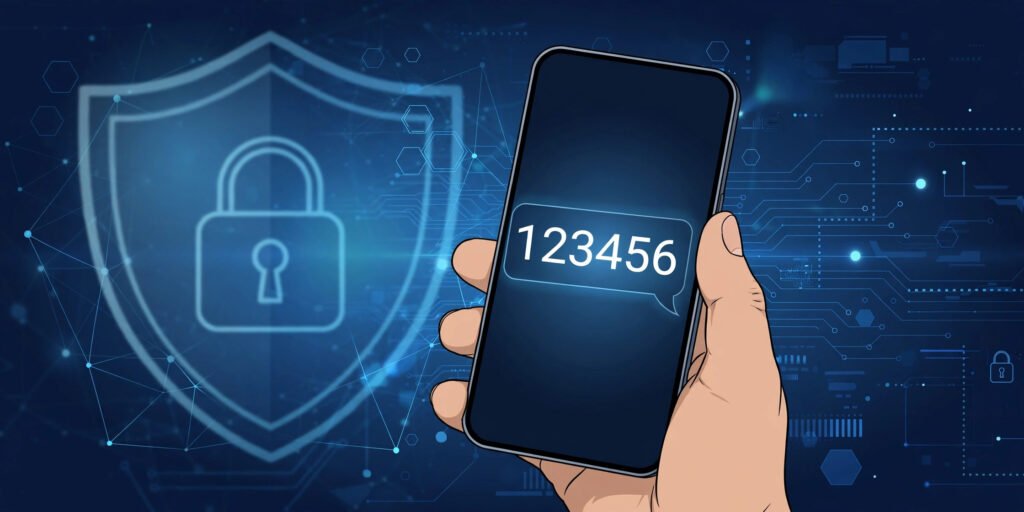
Here is the part worth remembering. An OTP message is not a password; it is a short contract. It names who is asking for money, how much, and whether it is one payment or an ongoing arrangement. Before you type any code, read those three things and check them against what you were doing on screen. If the message names a merchant you do not recognise, or talks about anything beyond the one payment you meant to make, close the page and do not enter the code. That mismatch is the warning sign in this kind of bkash otp fraud — the screen and the message disagree, and the message is telling the truth.
Dismislab’s advice is blunt: check the web address before you pay, and call 16247, the bKash helpline, the moment something looks wrong. Type the official address yourself or use a saved bookmark, and never reach a payment page through a link in a message, a social post, or a search advert. If you think you already approved something odd, call the helpline at once — auto-debit works by repeating, so every hour matters. Keep one rule in your head: a payment that costs nine taka should never need permission that could cost ten thousand. That single check would have stopped this version of bkash otp fraud cold.
Your Stolen Phone Can Empty Your bKash Account in Minutes
Sometimes the thief does not need your OTP at all, because he already has your phone. In Gulshan, a man called Hasib had his phone picked from his pocket on his way to work. Within ninety minutes he had called bKash from another number and had his account stopped. Two days later, after replacing his SIM, he found the account had been switched back on without his asking — and Tk85,115 was gone, moved out in small pieces through send money, cash out, and mobile recharges. His phone was locked, and his bKash app had a PIN. It still happened.
It looks nothing like classic bkash otp fraud — no fake call, no code read out loud. But the money leaves the same way, and the same habits stop it. A doctor named Kamal lost his phone to a snatcher on a bus in Shyamoli. His phone was unlocked when it was taken, and the gang moved money within ten minutes. They took Tk7,000 — and then took a loan of Tk35,000 in his name.
A university student, Beli, had her iPhone stolen on a bus in Demra on 5 October. Within two hours, Tk110,000 had left her account. The gang then changed her bKash PIN, broke open a savings plan worth nearly Tk100,000, and sent the money to online gambling sites. Six people have been arrested in her case, four of them members of a stolen-phone gang. It is bkash otp fraud with the phone call cut out — the gang holds the handset, so every code lands in their hands. The pattern is real: the Dhaka Metropolitan Police Cyber Support Centre took about 2,000 complaints from the start of the year to 19 October, and 23 percent of them were about lost phones.
So what actually protects you? A strong lock on the phone itself, a separate secret PIN on the wallet, and no saved passwords in the browser — in Kamal’s case the gang used the phone’s saved passwords to get in fast. If your phone is lost or stolen, treat it like a bkash otp fraud report: call 16247 at once from another phone and ask bKash to suspend the account, then call your mobile operator and block the SIM.
bKash says switching a suspended account back on needs several identity checks — the call must come from the registered number, and you must answer questions on your national ID and recent transactions. That is why Hasib’s story is so worrying: his account came back on without him asking. Bangladesh Bank says it will check the provider’s systems if a complaint reaches it.
Sources
- bKash — Security Tips (official) — bKash states its authorities will never ask for your PIN, Secret Code or Security Code; helpline 16247; registration is free.
- Nagad — Official Website — Nagad’s official site; helpline 16167 (096 096 16167 from abroad); USSD *167#.
- bKash — Cash Out (official) — bKash USSD platform *247# and helpline 16247.
- Bangladesh Bank — Customer Interest Protection Centre (CIPC) complaint procedure (official) — CIPC hotline 16236, email bb.cipc@bb.org.bd, and the three-step escalation: provider first, provider complaint cell, then CIPC.
- Bangladesh Police — Criminal Investigation Department (CID) (official) — CID investigates cybercrime and other offences requiring specialised technical expertise.
- BeforeYouPay — bKash and Nagad Scam Prevention Guide — independent prevention guide confirming the same rules: open the official app yourself, never share PIN or OTP, keep the transaction ID.
- The Business Standard, 29 September 2026 — 9 arrested in Bagerhat over SIM cloning, mobile banking fraud: https://www.tbsnews.net/bangladesh/crime/9-arrested-bagerhat-over-sim-cloning-mobile-banking-fraud-1557496
- The Business Standard, 30 September 2026 — 3 arrested in Bagerhat for cloning fingerprints, selling SIMs at high prices: https://www.tbsnews.net/bangladesh/3-arrested-bagerhat-cloning-fingerprints-selling-sims-high-prices-1560171
- Dhaka Tribune, November 2026 — Govt plans to digitise all post offices by February 2028: https://www.dhakatribune.com/bangladesh/development/424820/govt-plans-to-digitise-all-post-offices-by
- Wisenod — Advance Payment Scams in Bangladesh: 7 Checks Before Sending Money by bKash or Nagad: https://wisenod.com/en/advance-payment-scam-bkash-nagad/
- SearchMobileNumber — Mobile Money Scam Calls: M-Pesa, PIX & bKash Fraud Explained (updated 21 November 2026): https://www.searchmobilenumber.com/guides/mobile-money-fraud
- Dismislab (fact-checking group) — “Pay Tk9 to confirm Indian visa appointment, how fraudsters steal from bKash” (13 Oct 2026): https://en.dismislab.com/ivac-fake-website-phising/
- UNB — “BB unveils new cybersecurity framework to safeguard financial sector” (29 Mar 2026): https://unb.com.bd/category/Business/bb-unveils-new-cybersecurity-framework-to-safeguard-financial-sector/182486
- Barlekha Today — “Gangs drain bKash accounts from stolen and snatched phones, even take loans in victims’ names” (18 Nov 2026): https://barlekhatoday.com/en/news/bn-20261118-11933
- The Business Standard (TBS) — “Court bars Nagad administrator Motasem Billah from leaving country” (23 Nov 2026): https://www.tbsnews.net/bangladesh/acc-seeks-travel-ban-nagad-administrator-motasim-billah-1611586
- Barlekha Today — “SIM verification tightened to stop MFS fraud, phishing links to be shut: minister tells parliament” (16 Nov 2026): https://barlekhatoday.com/en/news/bn-20261116-11485
Last reviewed: 23 November 2026
This article is for education only and is not financial or legal advice.